Annotations:
Annotations That Ask Questions –
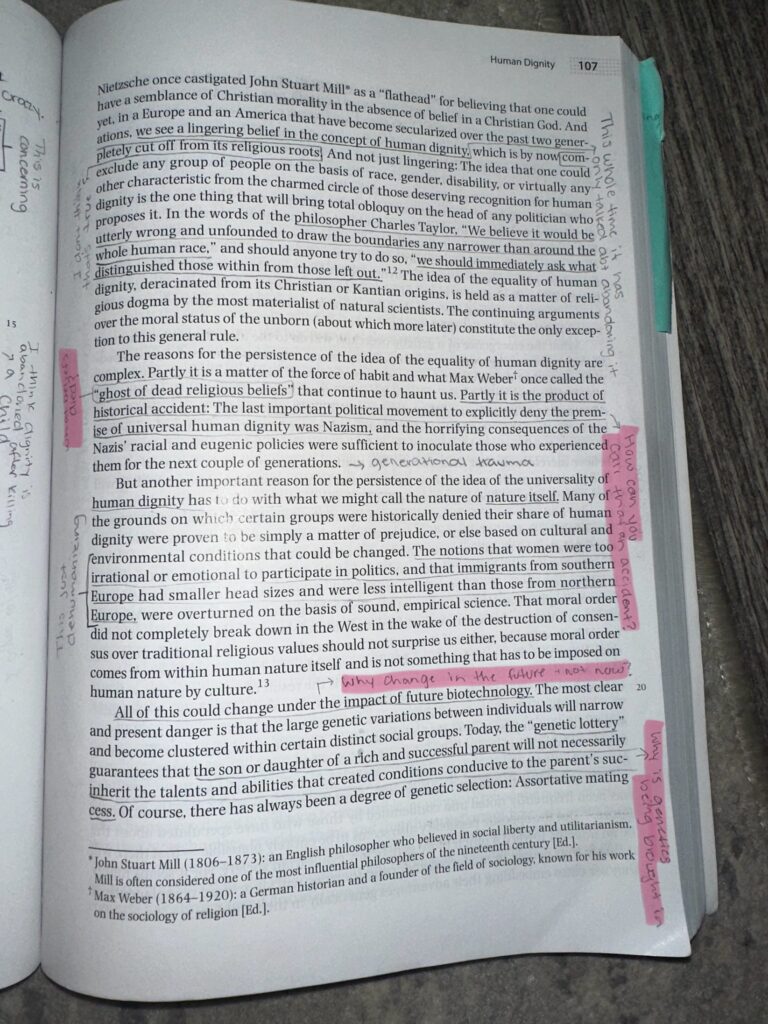
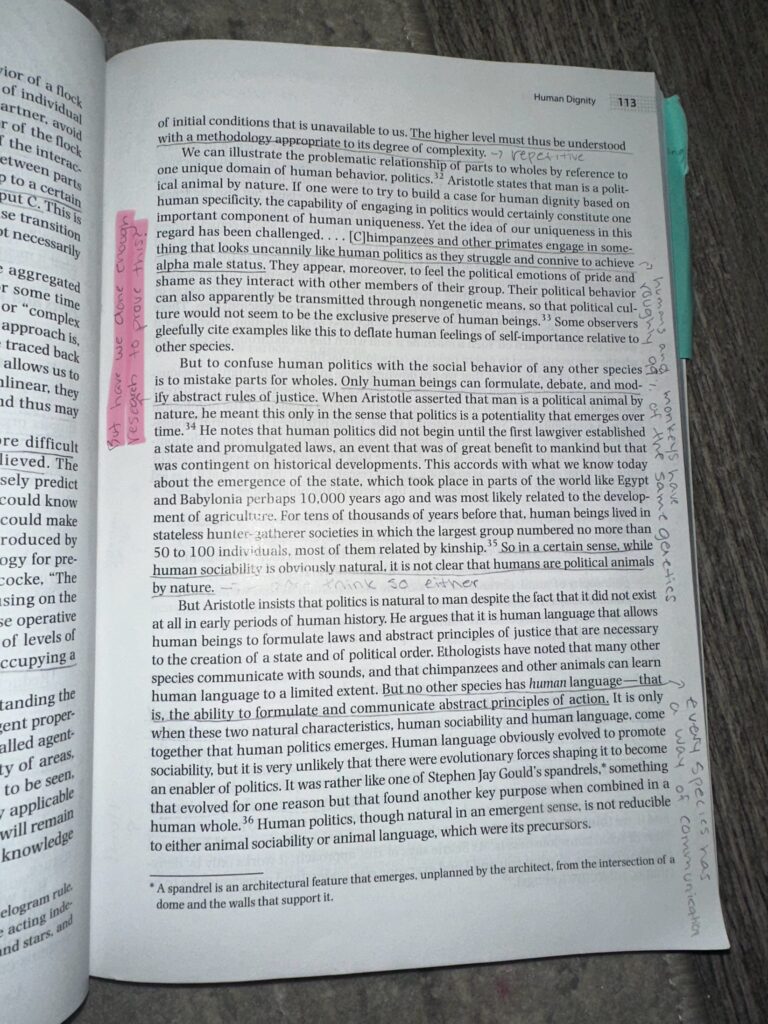
The annotations above are from a reading called “Human Dignity” by Francis Fukuyama. Within these pictures you can see by the highlighted areas above that writing annotations allows you to ask questions while you read.
Annotations That Show General Reactions –
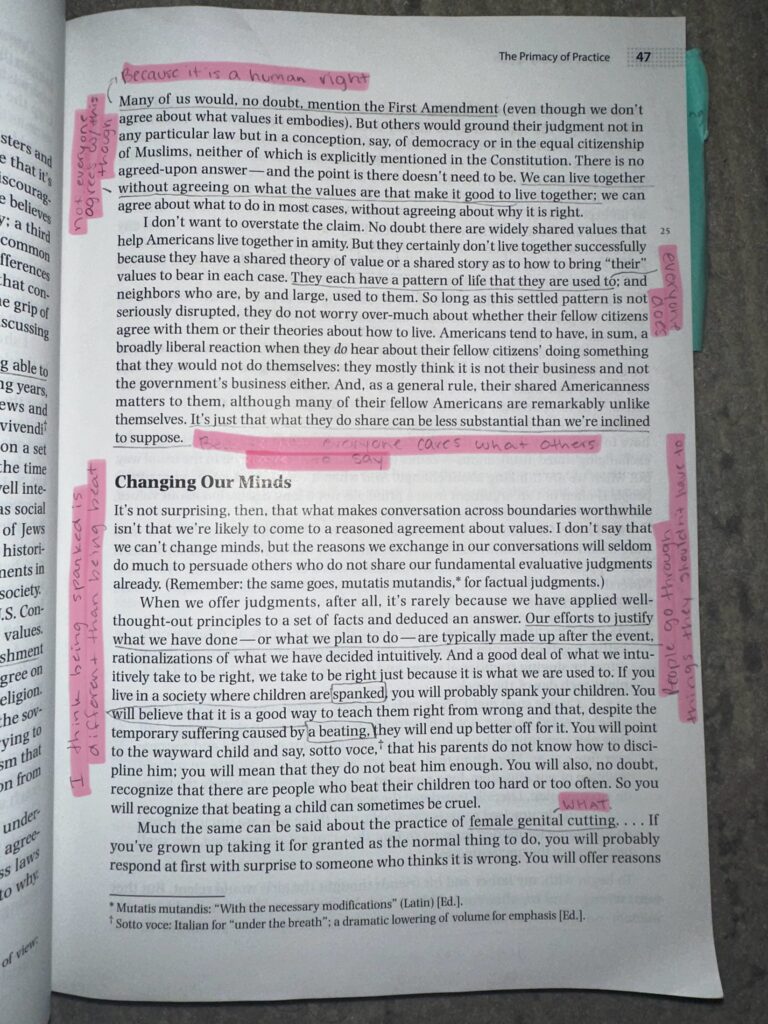
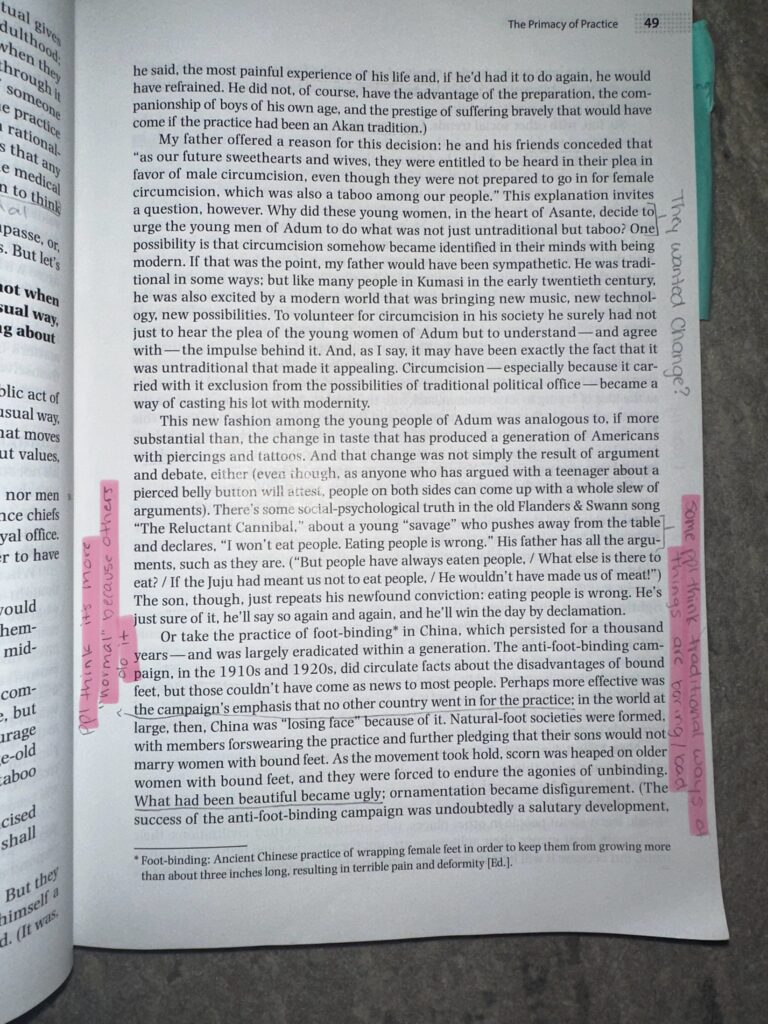
The annotations above are from a reading called “The Primacy of Practice” by Kwame Anthony Appiah. Within these annotations you can see that during the reading I have been able to make my own comments and general reactions to the reading.
Framing Statement:
Annotating passages like this is a very useful tool that enhances critical thinking, personal engagement, and active reading. Writing in the margins, underlining passages, asking questions, and simply making statements about the text helps the reader understand and feel more deeply connected to the author in a way. Annotations in a way help the reader to feel more like they are having an active conversation with the author when they are writing their annotations. Some readers may feel like this because as they are reading and asking questions and making statements, later in the text the statements and questions may be answered. All of these interactions in the passages allow for deeper understanding and encourage a better interpretation of the book. Individuals that annotate during reading can introduce critical reading techniques by identifying important parts of the reading and making connections to other readings that can build on the current thing they are reading. They also act as informal writing and give the reader room to express the way they feel about certain sections of the passage and allows them to write their opinions out as they read. Annotations are a key part to reading because they support the reader while asking questions, trying to find answers, and it even strengthens critical and cognitive thinking which allows the reader to actively process the information they are reading.
